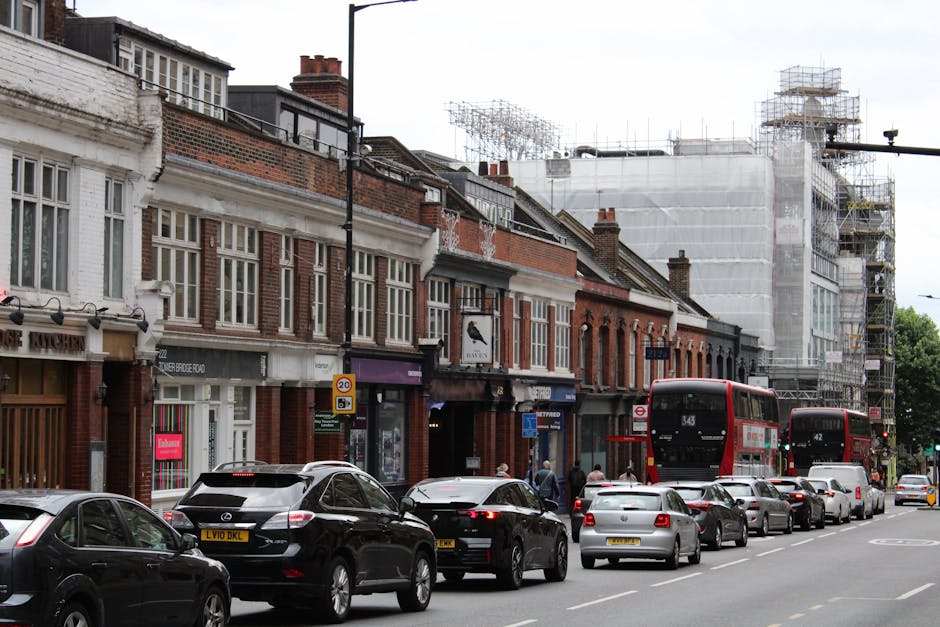
Barnes High Street removals guide for narrow access moves
If you are planning a move on Barnes High Street, you already know the awkward bit usually starts before the sofa even leaves the front room. Narrow access, tight corners, parked cars, shared entrances, awkward stairwells, and the occasional "how on earth does that fit?" moment can turn a normal house move into a logistical puzzle. This Barnes High Street removals guide for narrow access moves is here to make that puzzle much easier to solve. Whether you are moving from a flat, a terrace, or a property tucked behind a busy frontage, the key is to plan for the access, not just the boxes.
Done well, a narrow access move is calm, methodical, and a lot less stressful than people expect. Done badly, it becomes one of those days where everyone is standing in a hallway saying, "we'll just have to angle it a bit more." Let's skip that version.
Why Barnes High Street removals guide for narrow access moves Matters
Barnes High Street has the kind of layout that can look perfectly manageable from the pavement, then feel very different once a removal van arrives. That is the heart of the problem. Narrow access moves are not just about "a bit less space"; they affect every part of the day, from how the team parks to how furniture is carried, protected, and loaded.
The more confined the access, the more a move depends on coordination. A standard removal flow assumes there is room to open doors fully, turn safely with bulky items, and stage boxes near the exit. When you take that space away, the work gets slower and more technical. You need tighter packing, smarter timing, and a proper understanding of which items can go through which route. Simple enough in theory. In real life, a heavy wardrobe in a narrow stairwell is another story.
This matters for safety too. Tight spaces increase the chance of knocks, scuffs, strained backs, and accidental damage to walls, banisters, flooring, and furniture. If there is a shared entrance or a busy street outside, there is also the risk of blocking access for neighbours or other road users. A good plan reduces all of that without making the move feel overmanaged.
For many households, the right approach is somewhere between a traditional house move and a more compact service such as man and van support or one of the more tailored options offered through removal services. The best fit depends on volume, access, and how much physical handling the property will require.
How Barnes High Street removals guide for narrow access moves Works
A narrow access move usually works best when the property is assessed in layers. First comes the outside access: parking, kerb space, distance from the vehicle to the entrance, and whether the street gets busy at certain times. Then comes the building access: stairs, corridors, door widths, landings, and anything that narrows the route further. After that, the contents are matched to the route. Not every item needs to be treated the same way.
In practice, that means the move is often broken into smaller, smarter tasks. Delicate items get packed separately. Oversized items are measured before moving day. The loading plan is adjusted so the most awkward furniture is dealt with early, while the path is still clear. This kind of sequencing saves time, and more importantly, it avoids panic. Nobody wants to discover at 11:40 a.m. that a bed base cannot make the turn at the top of the stairs.
For smaller households or lighter loads, a compact vehicle may suit better than a full-size lorry. In some cases, a removal van is the sensible choice, especially when street access is constrained. For larger family homes or office contents, you may need a bigger vehicle and more hands, possibly alongside moving truck arrangements or a broader home moves service.
The real trick is not force. It is planning. The right team should know when to pivot, when to dismantle, and when to carry something a different way. That is what turns a difficult access move into a workable one.
Key Benefits and Practical Advantages
A properly planned narrow access move offers more than convenience. It helps protect the property, reduces stress, and keeps the day moving at a sensible pace. To be fair, those three things are worth a lot when you are already juggling key handovers, utilities, and the emotional chaos of moving house.
- Less risk of damage: Better planning means fewer knocks to walls, bannisters, doors, and furniture corners.
- Faster decision-making: If everyone already knows the access route, there is less hesitation on moving day.
- Improved safety: Narrow spaces require more controlled lifting, and a clear plan lowers the chance of slips or strain.
- Better use of labour: Crews can focus on moving items properly instead of reshuffling them because of blocked access.
- Less disruption to neighbours: Efficient loading reduces the time vehicles and doors are left open in shared areas.
There is also a less obvious benefit: better packing discipline. Once people know space is tight, they tend to pack more thoughtfully. That means fewer oversized cartons, fewer weak boxes, and fewer awkward "bits and pieces" that slow everything down. If you want a move to feel manageable, tidy packing is half the battle. Honestly, sometimes more than half.
For customers with a mixture of furniture, boxed contents, and storage needs, combinations such as furniture removals, packing and boxes, and storage can be useful if the move needs to happen in stages rather than all at once.
Who This Is For and When It Makes Sense
This guide is for anyone moving from a property where access is the real challenge rather than the volume of belongings. That includes flats above shops, maisonettes, converted buildings, terraced homes with tight hallways, and small offices where equipment has to pass through confined staircases or communal entrances.
It is especially relevant if you are:
- moving from or to Barnes High Street itself, where street access can be busy or limited;
- living in a top-floor flat with no lift;
- moving bulky furniture through narrow internal corridors;
- handling a student move with limited parking and a few very awkward items;
- relocating a small office with equipment and filing that needs careful handling;
- planning to move at a time when traffic and parking pressure will be higher.
It also makes sense if you have inherited a few extra complications, like a piano, fragile mirrors, or a sofa that was clearly designed by someone who never measured a staircase. In those cases, using specialist support matters. A dedicated piano removals service, for example, is far more sensible than hoping three people and a blanket will somehow solve the problem.
Not every move needs the same level of service. That is where judgement comes in. If your move is mostly lightweight and the access is tight but manageable, a smaller team may be enough. If the route is complicated, you will usually want more planning, more protection, and a team that has done this sort of thing before.
Step-by-Step Guidance
Here is a clear way to approach a narrow access move on Barnes High Street without overcomplicating it. This is the part that tends to save people a lot of hassle.
- Measure the access properly. Check door widths, stair widths, landing space, and the turning points in hallways. Measure the largest furniture pieces too, not just the easy stuff.
- Photograph the route. A few clear pictures of the entrance, stairs, parking area, and tight corners can tell a mover much more than a rushed phone description.
- Identify the awkward items early. Sofas, beds, wardrobes, desks, and appliances usually need the most thought. Make a list before packing gets out of hand.
- Decide what can be dismantled. Flat-pack furniture, bed frames, and some tables can be broken down to make the move simpler. Keep screws and fixings in labelled bags.
- Use the right packing size. Smaller, sturdier boxes are easier to carry through tight spaces. Huge cartons can become unsteady and unpleasant very quickly.
- Protect routes and edges. Cover flooring where needed and use blankets, wraps, or edge protection for furniture and doorway contact points.
- Plan parking and loading. If the van can stop close to the property, the move will usually run much more smoothly. If not, allow for extra carrying time.
- Build in time for the unexpected. Narrow access moves often take longer than expected. That is not failure; it is just reality.
If you are moving a whole house, consider whether a more complete house removals service or a tailored house removalists option makes more sense than trying to improvise a partial solution. The more awkward the access, the more helpful an experienced team becomes.
Expert Tips for Better Results
In our experience, the difference between a smooth narrow access move and a messy one often comes down to small habits. Not glamorous, but true.
- Keep hallways clear the night before. A corridor full of shoe racks, bins, prams, and loose bags slows everything down.
- Pack by weight, not by room only. Heavy books and files belong in smaller boxes. Your back will thank you later.
- Label "priority" items clearly. First-night boxes, chargers, kettle items, and bedding should be easy to find without opening ten identical cartons.
- Measure furniture before removal day. The couch that looks fine in the lounge may be the one item that causes the headache.
- Speak up about access surprises. If the entrance has a step, rail, tight corner, or low beam, mention it early. No shame in that.
- Use a smaller vehicle when appropriate. Sometimes a compact run with a man with van style approach is less stressful than trying to squeeze in a bigger truck.
One more thing: keep a little breathing space in the schedule. A lot of moving-day tension comes from feeling that every minute has to work perfectly. It doesn't. A narrow access move nearly always benefits from a calmer pace, even if it looks slightly less efficient on paper. That calm is what keeps items intact and people sane.
If you are not sure whether you need full packing help, a service like packing and unpacking services can take a surprising amount of pressure off the day. Especially if you are juggling children, work calls, or a property completion window. Not the most exciting part of moving, but definitely one of the most useful.
Common Mistakes to Avoid
Most problems in narrow access moves are avoidable. That is the frustrating part, really. Here are the mistakes that cause the most trouble.
- Guessing the measurements. "It should fit" is not a measurement. Not even close.
- Ignoring outdoor access. A good staircase is no help if the vehicle cannot park within a workable distance.
- Overpacking boxes. Big boxes full of books or kitchenware become difficult to carry and easy to drop.
- Forgetting shared access rules. In flats or converted buildings, entrances and hallways may need to stay clear for residents.
- Leaving dismantling until moving day. That usually turns into a time sink, and the odd missing Allen key situation. Classic.
- Not protecting floors and corners. A narrow route magnifies small bumps into visible damage.
Another common issue is underestimating how long a move will take. People often plan around the contents, not the access. That is backwards for Barnes High Street and similar streets. Access drives the pace. If the route is tight, the loading and unloading window needs to be more generous.
For commercial customers, the same rule applies. A constrained office entrance can be even trickier because equipment, filing, and desks are less forgiving than soft furnishings. In those situations, office removals or broader commercial moves planning is worth serious attention, not a last-minute scramble.
Tools, Resources and Recommendations
You do not need a truck full of gadgets to handle a narrow access move well, but a few practical tools make a huge difference.
| Tool or resource | Why it helps | Best used for |
|---|---|---|
| Tape measure | Confirms door widths, stair clearances, and furniture dimensions | Planning route fit |
| Labels and marker pens | Keeps priority boxes and dismantled parts organised | Packing and reassembly |
| Furniture blankets and wraps | Reduces scuffs in narrow corridors and on tight turns | Protection in transit |
| Floor protection | Helps prevent scratches, muddy footprints, and heavy-item damage | Entrances and shared hallways |
| Small, strong boxes | Much easier to carry in confined spaces | Books, kitchen items, files |
On the service side, consider what kind of moving support best suits the property. A compact load may work well with man with a van or man with van assistance. A larger home, more furniture, or a more complicated route may justify a more complete removals solution. If timing is tight, same day removals may be worth discussing, though only if the access is fully understood first.
If you are trying to reduce waste and avoid carting everything back and forth, it can also make sense to check whether any unwanted items can be handled through furniture pick up or furniture removals, especially before a move when space is already tight.
Law, Compliance, Standards, or Best Practice
For most household moves, the main compliance issues are practical rather than legal: safe lifting, property protection, access management, and making sure the work does not create unnecessary risk to people or buildings. In the UK, removal work is commonly shaped by accepted health and safety practice, insurer expectations, and sensible duty-of-care behaviour. That means careful handling, clear communication, and proper care around shared spaces.
If a move involves a residential block, a landlord, or a managed building, there may also be local rules about lift use, booking slots, loading bays, parking, or protecting common areas. These are usually set by the building manager rather than by broad national rules. So the safest approach is to confirm the specifics early. Not glamorous, but it saves arguments later.
It is also wise to check that the moving company has sensible insurance and clear terms before moving day. You can review details on insurance and safety, and read the company's health and safety policy plus terms and conditions so expectations are clear on both sides. Good providers are usually happy to talk through these points without fuss.
For businesses, workplace safety and access planning are even more important, especially when stock, computers, or filing systems are involved. If the move includes data-bearing equipment or sensitive items, the team should be careful, organised, and fully briefed. A neat move is a safer move. That's the plain truth of it.
Options, Methods, or Comparison Table
Different access challenges call for different approaches. There is no single best method, which is why a quick comparison helps.
| Option | Best for | Strengths | Limitations |
|---|---|---|---|
| Small van move | Light to moderate loads with tight parking | Flexible, easier to place close to the property | May require several trips |
| Full removals crew | Larger homes or more complex access | More hands, better for bulky items | Needs more coordination and space |
| Packing support | Time-poor households or fragile contents | Reduces stress and packing mistakes | Extra service cost |
| Storage-first move | Moves split across dates or staged access | Creates breathing room if timing is awkward | Items stay in storage for a period |
If you are deciding between a more compact approach and a full team, think about the route first and the furniture second. That simple change of thinking helps. For a one-bed flat with narrow stairs, a smaller vehicle and careful handling might be ideal. For a busy family home with wardrobes, white goods, and boxed contents, a larger, more structured plan is usually better.
Students often sit somewhere in the middle. Access is tricky, but the load is usually lighter. For that kind of move, student removals can be a sensible fit, especially if the date is fixed and the budget is tight.
Case Study or Real-World Example
Here's a realistic scenario. A couple is moving out of a first-floor flat on Barnes High Street. The entrance is narrow, the stairwell turns sharply halfway up, and parking outside is limited in the morning. They have a sofa, a double bed, a small dining table, three book boxes that are heavier than they should be, and a couple of delicate lamps.
Instead of waiting until moving day to work out the route, they measure the staircase, photograph the turn, and tell the movers which items are likely to be difficult. The bed frame is dismantled the night before. Boxes are repacked so the books are split into smaller loads. The van is scheduled to arrive at a quieter time, and the team protects the hallway before carrying the furniture through.
The result is not magical. It is just organised. The move still takes patience, because narrow access is narrow access, but there are no panicked decisions, no damaged banister, and no one standing outside wondering why the sofa has suddenly developed an aversion to corners. That, honestly, is the whole game.
If the same couple had been moving larger furniture or a full household, they might have been better choosing a broader house removals package or even arranging short-term storage to split the move into calmer stages.
Practical Checklist
Use this checklist a few days before the move. It keeps the important things visible.
- Measure all main doors, stairways, landings, and turning points.
- Check whether parking or loading space is available near the property.
- Photograph the entrance, hallway, stairs, and any tight corners.
- Identify items that need dismantling or special handling.
- Pack heavy items into smaller boxes.
- Label fragile, priority, and room-specific boxes clearly.
- Protect floors, banisters, and door frames where needed.
- Confirm arrival time, access notes, and vehicle type with the mover.
- Keep keys, documents, chargers, and essentials separate.
- Build in extra time for loading and unloading.
A good checklist feels boring right up until it saves your day. Then it suddenly becomes the smartest thing you did all week.
Get a free quote today and see how much you can save.
Conclusion
A Barnes High Street move with narrow access does not need to be a disaster waiting to happen. With the right measurements, the right vehicle, thoughtful packing, and a realistic plan for the route, it becomes a controlled and manageable job. The main lesson is simple: do not treat access as an afterthought. On streets like this, access is the move.
Be prepared, stay flexible, and give the process a little more time than you think it will need. That small cushion can make the whole day feel lighter. And if you are unsure whether your move needs a smaller van, a fuller removals team, or extra packing support, take the time to compare your options carefully through removal companies and the related service pages. A bit of planning now usually saves a lot of heavy lifting later.
In the end, the best move is the one that feels steady, not frantic. That peace of mind matters more than people admit.
Frequently Asked Questions
What counts as a narrow access move on Barnes High Street?
It usually means the property has limited space for carrying furniture, turning corners, loading a vehicle, or navigating stairs and shared entrances. If a sofa, wardrobe, or appliance needs careful manoeuvring, it is probably a narrow access move.
How do I know if my furniture will fit through the stairs or hallway?
Measure the furniture first, then compare it with the narrowest points on the route. Door widths, stair width, landing size, and ceiling height all matter. If in doubt, take photos and ask the mover to review them before moving day.
Is a small van better than a larger truck for tight access?
Often, yes. A smaller vehicle can be easier to park, easier to load from a tight street, and less disruptive in busy or restricted areas. That said, the right choice depends on how much you are moving and how far the vehicle will need to park from the property.
Should I dismantle furniture before the move?
If the item is bulky or awkward, usually yes. Beds, tables, and some shelving units are much easier to move in parts. Just keep fixings together in labelled bags so reassembly is not a scavenger hunt later.
Do narrow access moves take longer?
Usually they do. The route is slower, the handling is more careful, and there may be extra time spent protecting walls, doors, or floors. Building that extra time into the schedule is one of the smartest things you can do.
What if parking is limited outside my property?
That should be discussed early. Parking distance affects the whole move because every item may need to be carried farther. If parking is tight, a smaller vehicle or a move timed for a quieter period may help.
Can I use storage to make the move easier?
Yes, storage can be very useful if you need to split the move across dates or reduce the amount of furniture handled at one time. It is especially handy when access is tight and you want less pressure on the main moving day.
What should I tell the removals team before the move?
Tell them about staircases, tight corners, low ceilings, parking limits, fragile items, bulky furniture, and anything unusual about the access route. The more accurate the information, the smoother the day tends to be.
Are piano or other specialist items a problem in narrow access homes?
They can be, yes. Heavy or delicate items need extra care and the right handling approach. A specialist service is usually the safest choice if the route is tight or the item is especially valuable.
What are the biggest mistakes people make with narrow access moves?
The biggest ones are guessing measurements, overpacking boxes, leaving dismantling until the last minute, and forgetting about parking or shared access. Those small oversights are what usually cause the biggest delays.
How far in advance should I arrange a narrow access move?
As early as you reasonably can, especially if the move is on a busy street or involves a complex property layout. Early planning gives you time to measure, photograph the route, and choose the right service level.
Where can I find more information about service options and pricing?
You can review the available moving options and service details on the site, including pricing and quotes, which is useful when you are comparing the best setup for a difficult access move.